
Kidney Stone
Passing kidney stones can be quite painful, but the stones usually cause no permanent damage. Depending on your situation, you may need nothing more than to take pain medication and drink lots of water to pass a kidney stone. In other instances, surgery may be needed. Your doctor may recommend preventive treatment to reduce your risk of recurrent kidney stones if you’re at increased risk of developing them again.
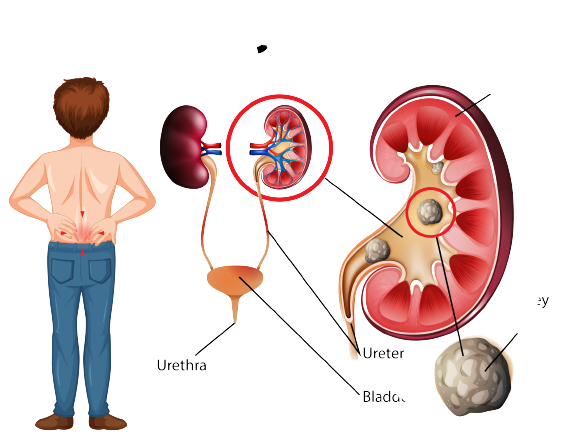
Symptoms
A kidney stone may not cause symptoms until it moves around within your kidney or passes into your ureter — the tube connecting the kidney and bladder. At that point, these signs and symptoms may occur:
- Severe pain in the side and back, below the ribs
- Pain that spreads to the lower abdomen and groin
- Pain that comes in waves and fluctuates in intensity
- Pain on urination
- Pink, red or brown urine
- Cloudy or foul-smelling urine
- Nausea and vomiting
- Persistent urge to urinate
- Urinating more often than usual
- Fever and chills if an infection is present
Pain caused by a kidney stone may change — for instance, shifting to a different location or increasing in intensity — as the stone moves through your urinary tract.
When to see a doctor
Make an appointment with your doctor if you have any signs and symptoms that worry you.
Seek immediate medical attention if you experience:
- Pain so severe that you can't sit still or find a comfortable position
- Pain accompanied by nausea and vomiting
- Pain accompanied by fever and chills
- Blood in your urine
- Difficulty passing urine
Are you or a loved one struggling with kidney disease?
Look no further than our top-rated kidney treatment hospital. Our team of expert doctors and nurses will provide the highest quality care to ensure the best possible outcomes. Don’t wait any longer to receive the treatment you deserve. Schedule an appointment with us today.